
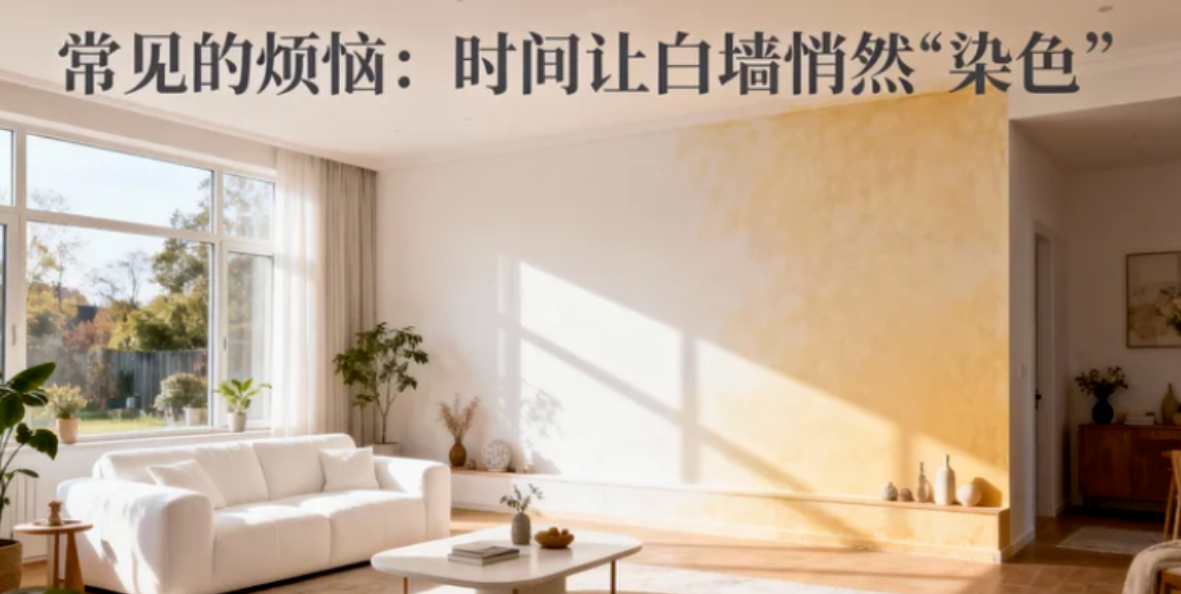
Have you ever had this trouble: the white walls at home a few years ago were unknowingly covered with a layer of beige?The color of your beloved white wardrobe door is starting to lose its brightness?Don't worry, this is probably not dirty, but the paint itself has "yellowed".
As "old friends" in the paint industry, we are exposed to inquiries about yellowing of white paint every day.Today, we will put aside complicated chemical formulas and use the most straightforward vernacular to thoroughly explain the problem of "why white paint turns yellow" and tell you how to deal with it.
1. The same origin remains unchanged: the “number one killer” whose white paint turns yellowThe core and most common reason why white paint turns yellow is actually two words: Oxidation.You can think of it as the "aging" process of the paint film.
Just like our skin ages slowly when exposed to the air, the paint film is also facing three major "aging agents" from the environment every minute:
Sunlight (especially UV rays): This is the most powerful "fading accelerator".Ultraviolet energy is very high and can directly destroy the molecular structure in the paint film, causing the degradation of pigments, resins and other components, thereby losing the original whiteness and showing the underlying or denatured yellow color.
Oxygen and pollutants in the air: Paint films undergo a slow oxidation reaction with oxygen.If there are chemical pollutants such as oil fumes and sulfides in the air, this "yellowing" process will be faster.
Moisture: In a humid environment, especially in a poorly ventilated space, moisture may participate in the chemical reaction of the paint film, sometimes inducing or accelerating yellowing.
2. Different “physical constitutions” lead to different yellowing speedsIt's the same white paint. Why do some paints turn yellow in three years and some remain white in ten years?The key is the type of paint.
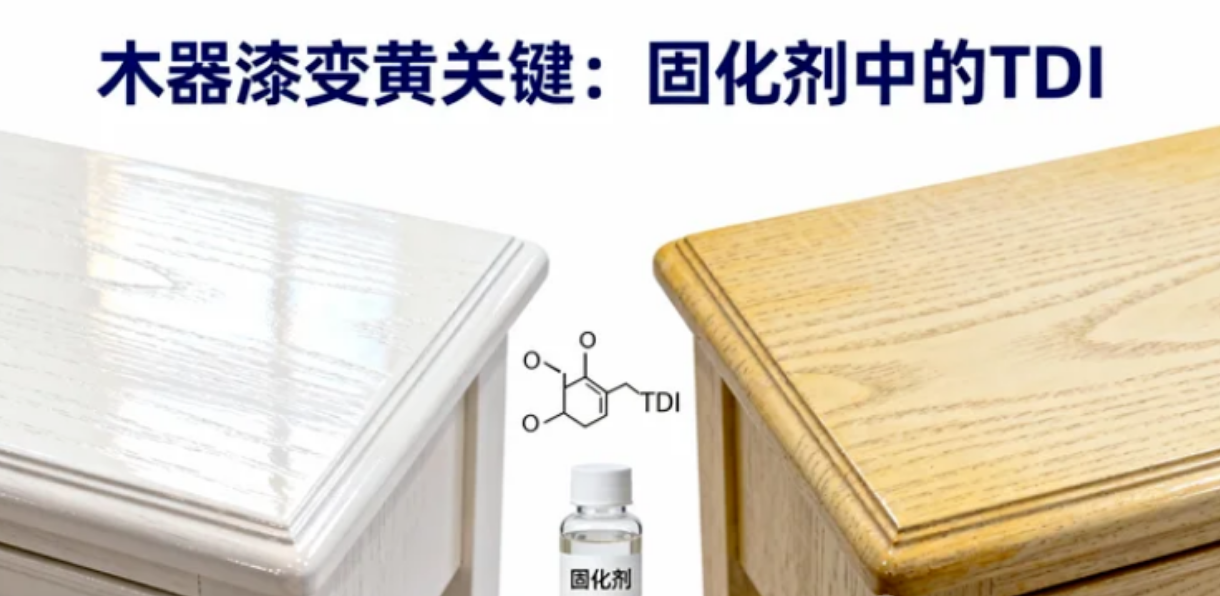
1. Wood paint (especially polyester paint) - "traditional" that is prone to yellowingWhen decorating your home, many of the varnishes or white paints used by carpenters to paint cabinets, doors and windows fall into this category.During construction of traditional polyester paint, something called a "curing agent" must be added to allow it to dry and harden.
The problem lies in this "curing agent".It contains an ingredient called TDI (toluene diisocyanate).After the curing reaction of TDI itself, the residue or its subsequent oxidation process is particularly likely to produce yellowing substances.This is the core reason why some white wooden furniture, cabinets, and even the walls next to them tend to turn yellow after a few years.
The good news is: Nowadays, major brands of wood paints generally launch "anti-yellowing" or "anti-yellowing" series of products.They have greatly delayed the yellowing process by improving the curing agent composition (such as replacing part of TDI with more stable substances such as HDI) and adding anti-UV additives.If you are very concerned about the durability of white wood, spending more budget to choose high-quality "yellowing resistant" wood paint is the key.
2. Water-based paint (such as wall latex paint) - relatively stable "environmental protection school"
The big white walls in your home are painted with latex paint, the main force among water-based paints.It uses water as diluent, is environmentally friendly and has little taste.
In terms of resistance to yellowing, high-quality brand latex paints usually perform much better than traditional oil-based wood paints.Because it avoids the use of TDI curing agents.As long as you don’t suffer extremes for a long time

Dirección de la empresa:
Parque industrial GU Ojiatun, ciudad del eje ξpress G, ciudad de zh U, Wei Fang, provincia de S shake, China.
Cooperación de mercado:
Gerente Xuan:+86 18563627592


Copyright © 2025 Weifang Xingyuan Paint Industry Co., Ltd
Mapa del sitioEste sitio web utiliza cookies para garantizar que obtenga la mejor experiencia en nuestro sitio web.

 English
 Pусский
 العربية



 Whatsapp
 Teléfono
 E-mail
Comentario
(0)